Epidemiology, modelling, and community studies
Imperial's infectious disease epidemiology centres
Explore Imperial specialist centres for infectious disease epidemiology, including the:
Epidemiology is critical for pandemic preparedness and response as it enables the prediction of the spread, outbreak size, and severity of the disease threat. It also helps to understand the risk factors and the resulting health burden. These analyses provide insight at national and global scales.
Imperial researchers play key roles in monitoring global outbreaks (including of Covid-19, Mpox, bird flu, Strep A, Ebola, dengue), facilitated by:
- Expertise in epidemiology, modelling, and global health analytics
- Unique methods and tools (e.g., research software)
- Access to and leadership of community transmission studies
Experts working in this area
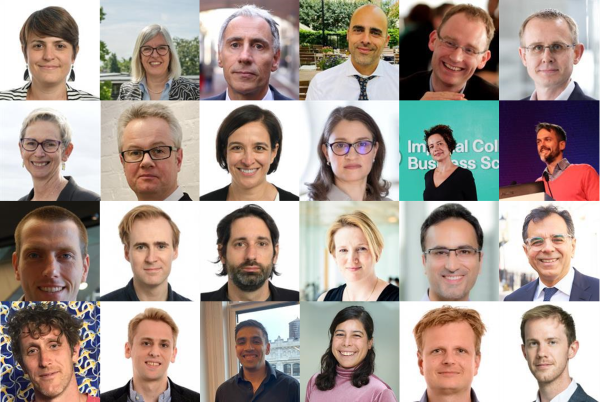 Click on the topics below to explore the work and interests of the ~40 research groups using modelling to understand transmission, influences, and impacts of outbreaks.
Experts working in this area
Tracking disease transmission
- Dr Marc Baguelin: Infectious disease epidemiology and outbreak analysis (influenza pandemic, Ebola outbreak, SARS-CoV-2 pandemic). Example (In Covid): Disease modelling and influencing vaccination policies.
- Professor Mauricio Barahona: Mathematical modelling and machine learning. In Covid (example): Prediction of hospital-onset COVID-19 infections.
- Dr Lauren Cator: Disease spread by mosquitoes, ticks and other vectors; OneHealth Vector-Borne Diseases Hub
- Dr Anne Cori: Mathematical and statistical disease modelling, including characterising transmissibility and predicting outbreak trajectories in real time; health inequities. Example (in Covid): Rapid assessment of SARS-CoV-2, including new variants in real time; pandemic burden in low income settings; impact of delayed interventions.
- Professor Christl Donnelly: Statistical epidemiology (including diseases affecting both public health and animal health), including understanding the effect of interventions on infectious agent transmission dynamics and population structure. Example (in Covid): REACT study of epidemiology and transmission of SARS-CoV-2.
- Professor Paul Elliott: Large-scale population studies for public health interventions. Example (in Covid): REACT study for epidemiology and transmission of SARS-CoV-2.
- Professor Nuno Faria: Genomics, evolution and epidemiology of viral pathogens such as Zika, dengue, chikungunya, yellow fever, HIV, Ebola, influenza, and mpox; pandemic preparedness programmes across Latin America, Caribbean and Central Africa. Examples: Real-time SARS-CoV-2 genomic epidemiology and modelling that led to the discovery of Gamma VOC in Brazil, and establishment of arbovirus genomic surveillance in Brazil and Angola.
- Professor Neil Ferguson: Mathematical modelling of infectious disease transmission and impact on people and healthcare systems; impact of vaccines; role of immunity; risk factors. Example (in Covid): Transmission of SARS-CoV-2; impact of health inequity.
- Professor Axel Gandy: Computational statistics. Example (in Covid): Framework to model the COVID‐19 epidemic of the United Kingdom at the local authority level.
- Professor Azra Ghani: Outbreak modelling, including impact of demography, mixing patterns and access to healthcare.
- Dr Thibaut Jombart: Statistical genetics of pathogen populations to study spatio-temporal dynamics of infectious diseases. Example (in Covid): Outbreak modelling of SARS-CoV2.
- Professor Guy Nason: Statistical tools for modelling (transmission, economic response, interventions, including for SARS-CoV-2, foot and mouth; Forecasting and prediction expertise; Network time series.
- Professor Peter Openshaw: Collaborations related to epidemiology of respiratory viruses.
- Dr Will Pearse: Modelling disease vectors and estimating changes in transmission due to environment and climate; forecasting seasonal transmission; forecasting in healthcare, e.g., NHS bed usage; forecasting tick distributions to understand Lyme disease.
- Dr Thomas Rawson: Mathematical modelling and statistical techniques. Example (in Covid): Real-time modelling and projections.
- Professor Steven Riley: Spatial transmission processes, contact patterns and complex exposure histories; public health preparedness; surveillance. Example (in Covid): REACT-1 study.
- Dr Antonis Sergis: Laser optics and software to study aerosol generation; spreading of infections through aerosols in space to determine infection potential.
- Dr Robert Verity: Malaria epidemiology; population genetics and spatial data (incl. for COVID-19).
- Dr Erik Volz: Epidemiology dynamics and evolution of pathogens. Example (in Covid): Assessing transmissibility of SARS-CoV-2 variants.
Influences, impacts, and burden
- Dr Leon Barron: National-scale wastewater-based epidemiology to monitor and inform responses to new and changing medication and substance (mis)use changes in near real-time.
- Professor Samir Bhatt: Mathematics, statistics, and computer science tools for public health. Example (in Covid): Estimating the effects of non-pharmaceutical interventions on COVID-19 in Europe.
- Dr Chloe Bloom: Respiratory epidemiology. Example (in Covid): Susceptibility and outcome of patients with airway disease to SARS-CoV-2 infection, and the effect of inhaled and oral steroids.
- Professor Rafael Calvo: Design systems, behaviour analytics, communication, ethics.
- Professor Thomas Churcher: Modelling the control of mosquitoes borne disease and its control. Example: New insecticide treated nets for malaria control.
- Professor Graham Cooke: Community studies to study disease burden and health threats. Example (in Covid): COVID-19 REACT study.
- Dr Ilaria Dorigatti: Mathematical models to characterise their epidemiology and to evaluate control strategies; impacts of climate change and global travel on disease.
- Professor Majid Ezzati: Population health outcomes and determinants; health inequalities; global environmental health; global reporting on major cardiometabolic conditions related to infection. In Covid (example): Cardiometabolic conditions as risk factors for Covid; Epidemiology, mortality impact, excess deaths of SARS-CoV-2
- Professor Azra Ghani: Mathematical modelling; modelling to inform policies on how, where and when to implement different interventions. Example (in Covid): Outbreak modelling, including impact of demography, mixing patterns and access to healthcare.
- Professor Daniel Graham: Statistical modelling and simulation tools for analysis of civil engineering-related interventions. Example (in Covid): Social distancing in public transport; operational interventions on urban mass public transport during a pandemic; modelling the propagation of infectious disease via transportation networks.
- Professor Paul Kellam: Virus genomics, genomic epidemiology, and outbreak control; impact of animal reservoirs.
- Dr Viveka Guzman Ortega: Exploring the psychological, social and economic consequences of pandemics on individuals and communities, as well as social/environmental vulnerabilities and health disparities. Example (in Covid): Mental health and well-being in times of COVID-19: role of neighbourhood parks, outdoor spaces, and nature among US older adults
- Professor Katharina Hauck: Return-on-investment to pandemic preparedness. Example (in Covid): Optimising social and economic activity while containing SARS-CoV2 transmission using DEADALUS; Example (SARS-X pandemic): Estimating the value of CEPI’s 100 day mission in terms of public health, economic and educational benefits using the DAEDALUS model.
- Professor Alison Holmes: Behaviours and perceptions related to antimicrobial prescribing and resistance and infection risk. Example (in Covid): Trends in antimicrobial prescribing during pandemic; modelling epidemiology of changing patterns of bloodstream infections; patient and public perceptions of AMS during the pandemic.
- Professor Ajit Lalvani: Director, NIHR Health Protection Research Unit in Respiratory Infections.
- Professor Azeem Majeed: Use of health data to support outbreak response; use of data from NHS medical records, including for measuring Covid-19 vaccination uptake and clinical outcomes.
- Professor Marisa Miraldo: Integration of epidemiological, economic and behavioural modelling and observational studies.
- Dr Mahdi Moradi Marjaneh: Predictors of treatment outcome modelling
- Dr Jonathan Otter: Hospital onset Covid determination.
- Dr Oliver Ratmann: Statistical modelling for global health research and supporting underserved populations. Example (in Covid): Modelling of COVID-19 deaths, including those in children and associated with orphanhood; Example (in HIV): Analysing longitudinal cohort data including deep-sequence phylogenetics, mobility, and multi-morbidity outcomes.
- Professor Elio Riboli: Cancer epidemiology and prevention. Example (in Covid): Understanding and interventions for the accumulating number of undiagnosed cases of cancer and cardiovascular disease due to the COVID-19 pandemic.
- Dr Antonis Sergis: Laser optics and software to study aerosol generation; spreading of infections through aerosols in space to determine infection potential.
- Professor Helen Ward: Epidemiology and control of infectious diseases (HIV, STI, SARS-CoV-2). Example (in Covid): Co-lead REACT study of the long-term health impact of the COVID-19 pandemic on health and wellbeing.
- Dr Oliver Watson: Pandemic preparedness and alternative data sources for infectious disease modelling and humanitarian response modelling. Example (in Covid): Alternative epidemic indicators of COVID-19 with incomplete death registration settings.
- Dr Elizabeth Whittaker: Epidemiology and descriptive clinical cohorts of children with emerging conditions (e.g., Hepatitis of Unknown Aetiology, invasive Group A Strep outbreaks); immune responses to infectious diseases, biomarkers, vaccinations. Example (in Covid): Long-Covid in children and young people.
Highlight: Critical community transmission monitoring - The REACT studies
The Imperial-led REACT (Real-time Assessment of Community Transmission) Programme is a powerful study to understand and track SARS-CoV-2 infection on a population scale. It is unprecedented in the scale and depth of its dataset (linked with health data), which represents millions of people across England.


